
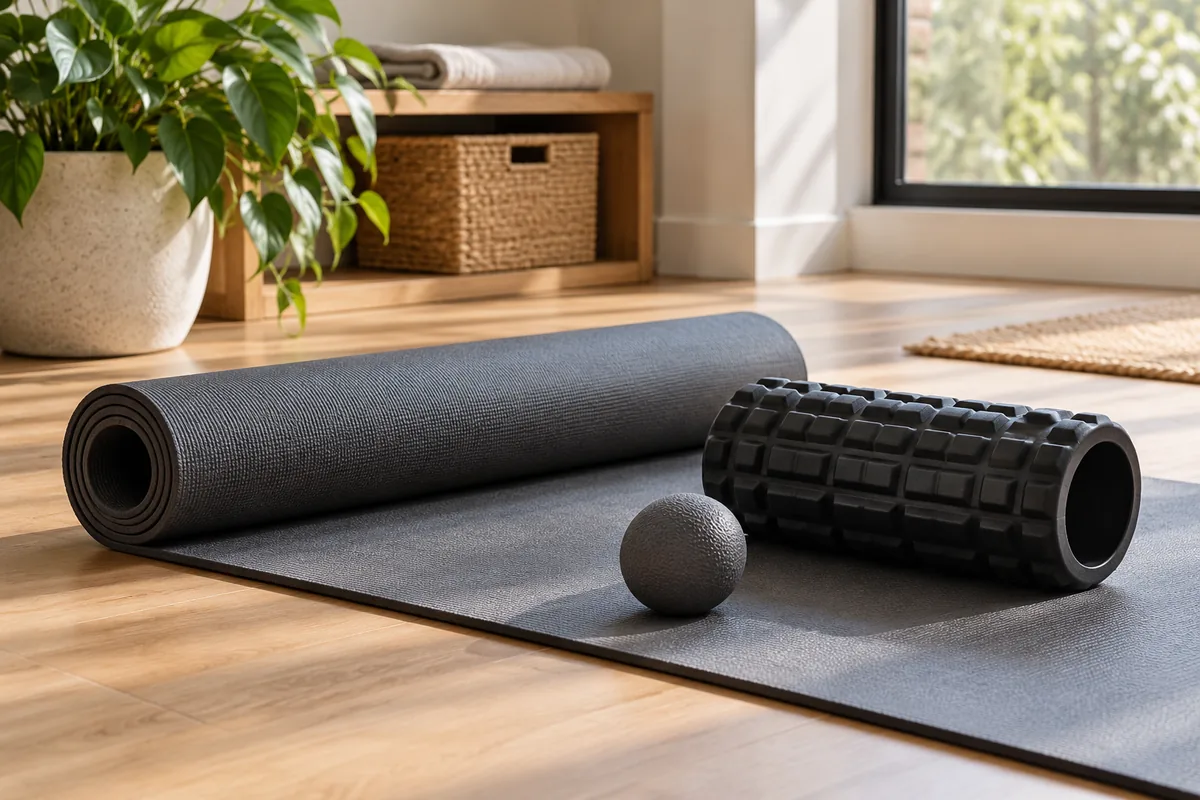
The TriggerPoint GRID 1.0 is a short, textured foam roller with a hollow core. Its main appeal on paper is a compact, easy-to-store format rather than electronic settings or a battery. This review uses public product documents and research; we have not tested the roller. TriggerPoint’s descriptions of its texture and benefits are manufacturer claims, not proof of a particular user’s recovery.
Dimensions and construction
The U.S. product page gives dimensions of 13 × 5.5 × 5.5 inches, a hollow core and an EVA foam surface. TriggerPoint lists a maximum supported weight of 300 lb and a one-year warranty. Check the precise listing and warranty for your market. The GRID 1.0 is different from the longer GRID 2.0 and the firmer GRID X; similar names do not mean the same size or feel.
The surface has several raised and flatter sections. Contact area and the amount of body weight placed on the roller affect sensation, so a patterned surface may feel different as it rotates. The maker compares the pattern with massage hands; that is a design analogy, not evidence that the roller provides the same experience or results as a practitioner.
Who may prefer the short format
At 13 inches long, the GRID is easier to put in a cupboard or bag than a long full-size roller. Its shorter length also means less side-to-side surface. Measure the intended storage and use area, allowing enough clear floor around the roller for movement and a stable way to get down and up. If you want a long surface for lying lengthwise, check a longer roller’s dimensions instead of assuming this one will fit.
Rolling requires the user to support and shift some body weight. A person who finds floor transitions difficult may prefer a different tool or setup. A smooth, softer roller can also be a reasonable alternative if a patterned surface feels too intense. More texture or pressure is not automatically better.
Care and practical use
TriggerPoint describes the surface as water- and sweat-resistant and recommends cleaning with mild soap and water. Wipe it clean and let it dry before storage. Inspect the surface and core for cracks or deformation; retire a damaged roller rather than trying to rely on a compromised support. Avoid storing it where heat or crushing loads may distort it.
- Set up on a stable, uncluttered surface where the roller will not run into furniture.
- Adjust how much weight rests on the roller using support from the floor; avoid forcing painful pressure.
- Stop for pain, numbness or unexpected symptoms, and seek appropriate guidance when a health condition makes rolling uncertain.
- Keep the roller within the manufacturer’s stated support limit and check the instructions for your exact unit.
Do not treat rolling as an injury treatment or a replacement for a suitable warm-up. There is no need to chase the deepest sensation. Comfort and control are useful buying criteria, and a return policy can matter if you have not encountered this style of surface before.
What the evidence means
A 2019 meta-analysis found that measured foam-rolling effects were generally small and sometimes negligible, with some short-term findings for flexibility and soreness. A 2022 review of longer-term randomized studies found conflicting flexibility results and unclear recovery effects. Different participants, tools and methods limit direct comparisons. Neither review establishes the GRID 1.0 as superior to another roller.
The GRID is worth considering when its compact size, textured surface and simple cleaning fit your routine. It is less compelling if you need a long support surface or dislike concentrated pressure. Buy for those practical features, with realistic expectations about evidence.
A short roller can be moved easily between rooms, but the user still needs enough clear space to support the body and move without hitting nearby objects. Position it on a surface that will not slip, and keep the surrounding floor free of loose accessories. Check the 300 lb support figure against the intended user and the actual manufacturer instructions; it is a stated product limit, not a structural guarantee for a damaged unit.
For a shared device, agree on a simple cleaning routine and inspect the textured sections as well as the ends. A return window may be particularly helpful if you are deciding between a textured and smooth surface.